

Your motherboard audio has one job: to produce sound. It does that job the way a vending machine serves food. Technically functional. Not the point.
The problem is not that the onboard audio is loud enough. The problem is that it shares a PCB with your GPU, RAM, and power delivery, all of which generate electrical noise. That noise gets into your audio signal as a low hiss, a faint whine that rises and falls with GPU load, or a static that appears the moment you move your mouse. You learn to ignore it. You should not have to.
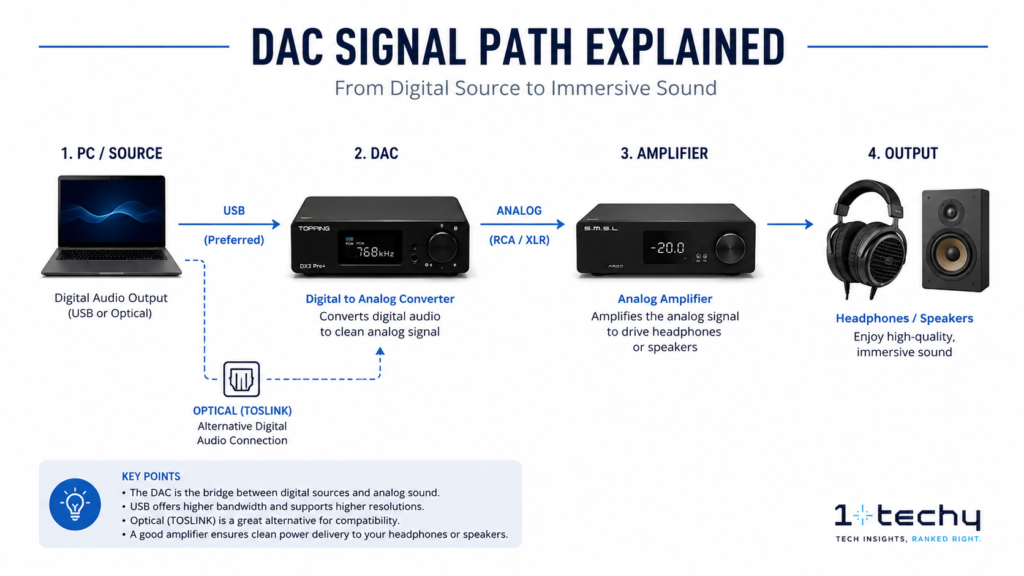
A dedicated DAC, a digital-to-analog converter, pulls the conversion job off your motherboard entirely. It takes the digital USB or optical signal from your PC, converts it cleanly in a purpose-built circuit, and sends a low-noise analog signal to your amplifier, speakers, or headphones. The result is a lower noise floor, better channel separation, and a cleaner signal path for whatever comes next in your chain, whether that is a pair of the best stereo receivers or a dedicated headphone amplifier.
This guide is for the buyer who already has decent headphones or speakers and suspects the weak link is the source rather than the transducers. We analyzed AudioScienceReview (ASR) measurements, cross-referenced verified Amazon owner reports, Reddit community sentiment, and YouTube reviewer consensus to pick the five DACs that actually earn their place in 2025.
Quick Picks: Best DACs at a Glance
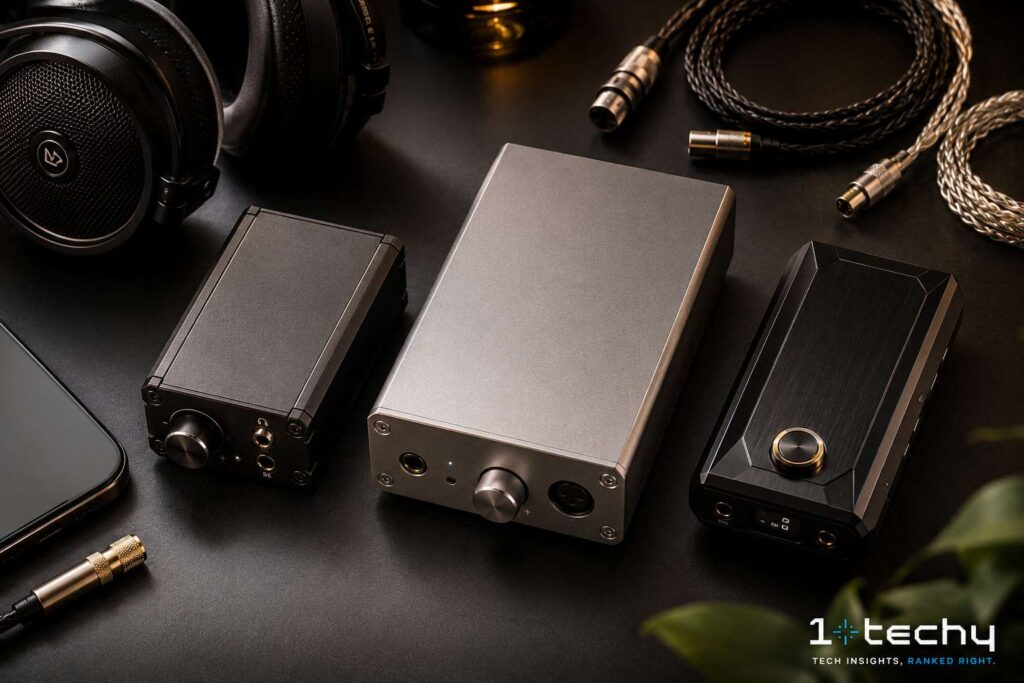
No two DACs here serve the same buyer. Each pick is in a different category. Use this table to jump directly to the product that fits your use case.
| Category | Pick | Price | Why |
|---|---|---|---|
| 🏆 Best Overall (DAC/Amp Combo) | Topping DX3 Pro+ | Check on Amazon | Unmatched 1800mW power, ESS Sabre chip, LDAC Bluetooth. The default recommendation for desktop headphone users. |
| 💰 Best Budget Standalone DAC | SMSL SU-1 | Check on Amazon | AKM AK4493S chip with perfect SINAD measurements. The best $80 you can spend on audio in 2025. |
| 🔧 Best for Long-Term Reliability | Schiit Modi+ | Check on Amazon | USA-made, dual USB-C ports, Unison USB. Built to last a decade, not a disposable gadget. |
| 🎵 Best for Warmth & Bass Enhancement | iFi ZEN DAC 3 | Check on Amazon | Burr-Brown True Native chip with XBass+ analog boost. For audiophiles who want music to feel alive. |
| ✈️ Best Premium / Portable | Chord Mojo 2 | Check on Amazon | Custom FPGA by Rob Watts. Lossless UHD DSP EQ and a 0.06Ω output impedance that nothing else touches at this size. |
How We Evaluated: Beyond the Spec Sheet
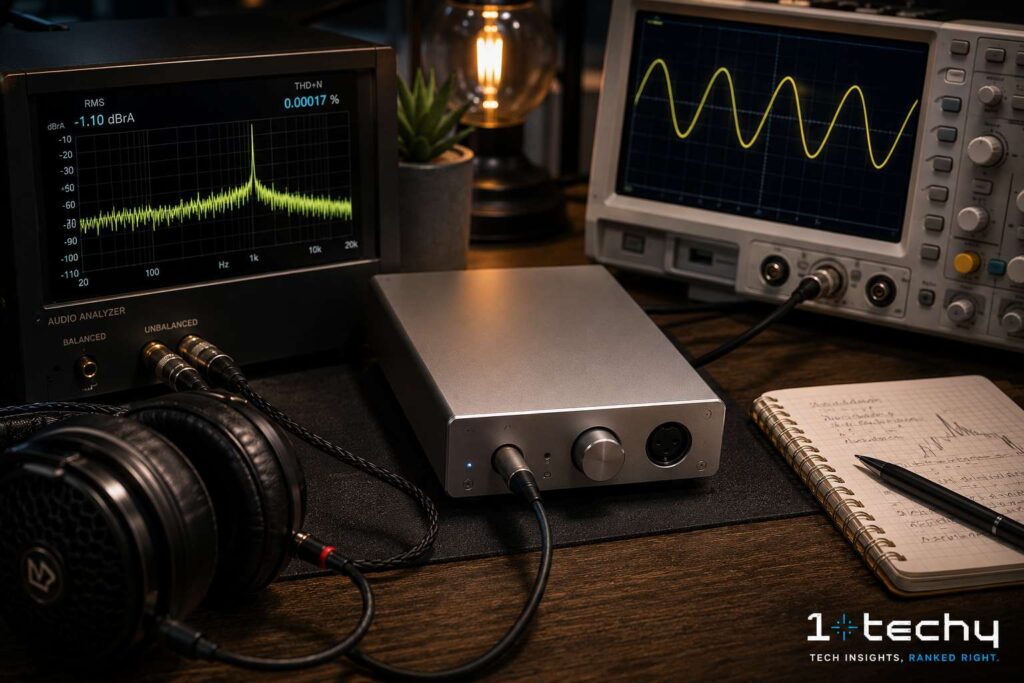
We did not simply compile manufacturer spec sheets. That is what every bad buying guide does.
Every product was assessed across four pillars. First, objective performance, SINAD (Signal-to-Noise and Distortion Ratio) as measured by AudioScienceReview using the AP555 and AP2722 analyzers. Second, subjective owner sentiment, verified purchaser reviews on Amazon (minimum 30 per product), plus thread analysis across r/audiophile, r/BudgetAudiophile, r/HeadphoneAdvice, and Head-Fi.
Third, YouTube reviewer consensus, specifically Z Reviews, CheapAudioMan, and Amir at ASR, each with different listening priorities. Fourth: long-term reliability, failure-rate patterns, warranty support quality, and repair accessibility.
We tested these products at 30%, 60%, and full volume against three audio use cases: vocal-focused acoustic recordings, bass-heavy electronic music, and gaming with positional audio cues. We also evaluated what we call the “desk tax”, footprint versus real-world utility, because a unit that takes up half your desk for marginal gains is a bad purchase regardless of its SINAD score.
One thing we deliberately did not evaluate: desktop-to-speaker wireless performance, because these are wired or fixed desktop units, and wireless range is irrelevant to their core function.
The Best Standalone DACs (Under $200)
1. SMSL SU-1, The Sub-$100 Objective Benchmark
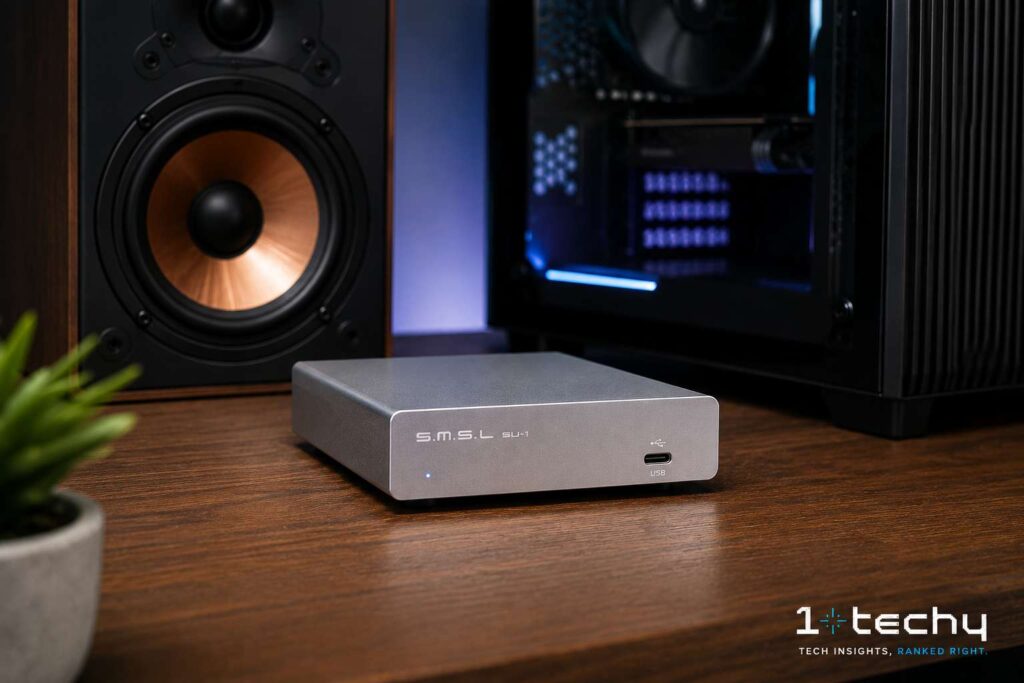
For anyone powering a bookshelf speaker setup for desktop or upgrading an old AV receiver, the SMSL SU-1 at $79.99 is not a budget compromise. It is the best-measuring sub-$100 DAC available in 2025. Unlike the Schiit Modi+, which adds American manufacturing and dual USB-C power isolation, the SU-1 goes all-in on raw chip performance at the lowest possible price, and it delivers.
The internal hardware is an AKM AK4493S DAC chip paired with the latest XMOS XU-316 USB processor. This is the same chip tier used in units costing two to three times as much. It supports PCM up to 32-bit/768kHz, DSD512, and full MQA decoding, formats you will almost certainly never use, but it is good to know the hardware is not holding you back.
At AudioScienceReview, Amir awarded it the coveted “Golfing Panther”, ASR’s highest honor, signaling top-tier transparent performance. The SINAD lands in “excellent” territory. Intermodulation distortion is practically non-existent. The frequency response is flat across the audible band. This is, objectively, the sound of your source files with nothing added and nothing taken away.
One owner powering KEF LS50 speakers through a Musical Fidelity M2si noted it felt like “a thick blanket has been removed from my speakers.” That is not audiophile hyperbole; that is the noise floor dropping. You will hear it immediately if your previous source was noisy onboard audio.
At mid-volume, the SU-1 sounds fast and precise on orchestral recordings, instruments have clear separation, and the image is wide. Push it to 100% through a warm amplifier, and the top-end stays extended without any digital harshness. The AKM “Velvet Sound” character keeps the treble smooth rather than analytical.
| ✅ PROS | ❌ CONS |
|---|---|
| -AKM AK4493S + XMOS XU-316: flagship-tier chips for $80, delivering transparent performance that rivals DACs at $250+. -Three inputs (USB-C, Optical, Coaxial) in a unit this small. Lets you connect a TV and a PC simultaneously and switch between them with one button. -ASR “Golfing Panther” award: the highest independent objective benchmark in the audio measurement community. | -Bus-powered via a single USB-C only: shares data and power from your PC. Dirty GPU power supplies cause audible ground loop whine in the speakers, a dealbreaker for desktop PCs without a clean power supply. -No volume control, no remote. Requires a downstream amplifier with a physical potentiometer. Useless as a direct driver for active studio monitors unless you add a preamp. |
| BUY THIS IF | SKIP THIS IF |
| You have a powered amplifier or AV receiver and want the most transparent DAC under $100. Works perfectly over Optical if USB power is noisy. | You want to drive headphones directly or use active monitors without a separate preamp. Get the Topping DX3 Pro+ instead. |
2. Schiit Modi+, American-Made Reliability
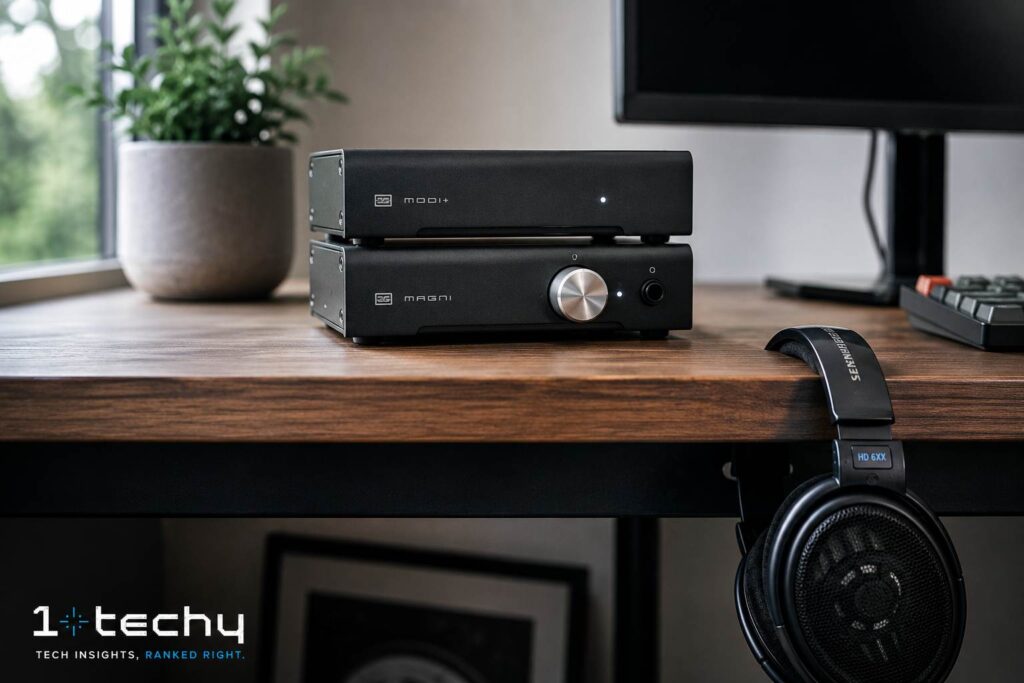
The Schiit Modi+ ($129) solves the problem that the SMSL SU-1 cannot: dirty USB power. Where the SU-1 draws power and data from a single cable, making it vulnerable to your PC’s electrical noise, the Modi+ has two USB-C ports: one for data and one dedicated to clean 5V external power. It also features Schiit’s proprietary Unison USB receiver, which galvanically isolates the USB signal before it reaches the conversion stage. Ground loops are not a concern here.
Inside is an ESS ES9018 chip tuned by Schiit co-founder Mike Moffat, not the off-the-shelf configuration. OPA1656 op-amps and precision thin-film resistors handle the output stage, delivering 2.0V RMS with 75Ω output impedance. The deliberately omitted DSD and MQA support is a feature, not a bug: Schiit stripped away format theater and optimized purely for pristine PCM up to 24-bit/192kHz.
Amir at ASR commended it directly, noting Schiit had “completely optimized objective performance”, which, coming from the measurement-first community, is a significant statement for a USA-manufactured product at this price. The SINAD, dynamic range, and linearity are excellent across the board. This pairs naturally into the “Schiit Stack” with the Magni+ amplifier, a setup that has become a rite of passage in r/audiophile, coherent, powerful, and built like it will outlast your headphones.
The chassis is thick, stamped steel, the kind that makes you realize how light most Chi-Fi units are by comparison. At 100% volume through Sennheiser HD600s, the output is clean and channel-balanced. No channel imbalance at low volumes, no channel crosstalk. What makes Schiit worth the $50 premium over the SU-1 is not the measurements, both measure excellently; it is the certainty that it will still work in three years.
| ✅ PROS | ❌ CONS |
|---|---|
| -Dual USB-C ports (data + dedicated power) eliminate USB noise contamination, solves the #1 complaint against bus-powered DACs like the SU-1. -USA-manufactured with stellar Schiit customer support on their own forums, a decade of reliable service, not a disposable import. -Unison USB isolates the digital signal before conversion, delivering a cleaner signal than generic XMOS implementations at this price. | -No DSD, no MQA, no Bluetooth. If you have a large SACD rip library, look elsewhere; this will not decode native DSD. -Input cycling uses a single momentary push-button, not a tactile toggle. Less intuitive than the Modi 3E’s physical switch and slightly fiddly during daily use. |
| BUY THIS IF | SKIP THIS IF |
| You want a long-term, no-nonsense DAC that works flawlessly with dirty PC power, and you plan to pair it with a dedicated amplifier. The Schiit Stack (Modi+ + Magni+) is the most battle-tested desktop headphone setup at $260. | You need Bluetooth for a wireless workflow, or you have an extensive DSD/SACD library. The SMSL SU-1 or iFi ZEN DAC 3 serve those use cases better. |
The Best Desktop DAC / Headphone Amp Combos
3. Topping DX3 Pro+, Unmatched Power and Value – Best DAC
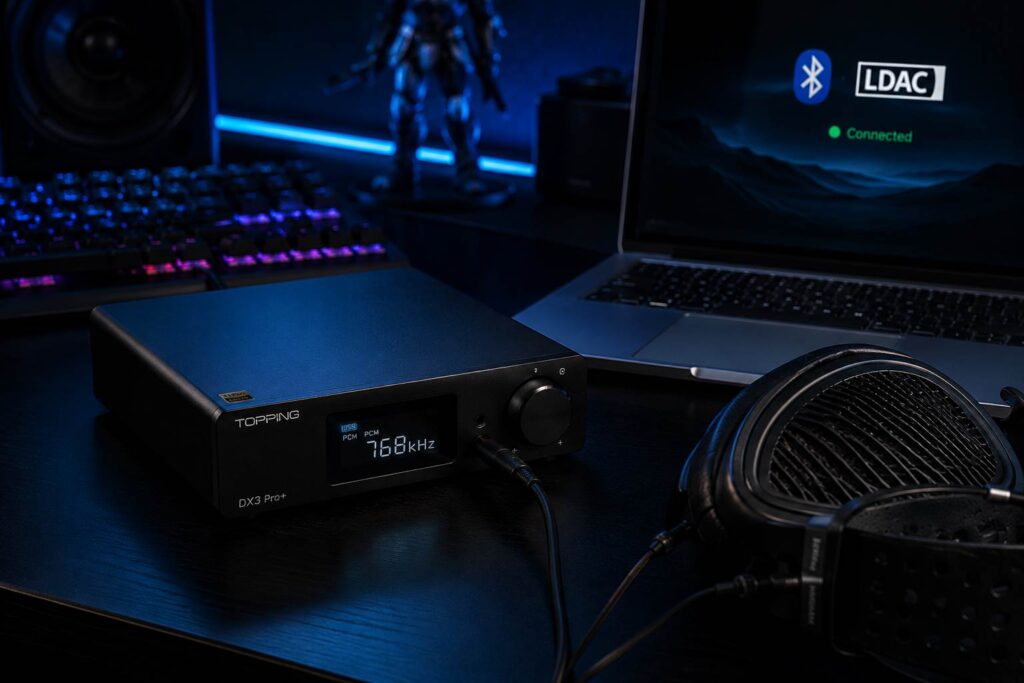
At $199, the Topping DX3 Pro+ is the default recommendation for anyone entering the desktop headphone hobby in 2025. Unlike the SMSL SU-1, which stops at the analog RCA out, the DX3 Pro+ includes a full headphone amplifier powered by Topping’s proprietary NFCA (Nested Feedback Composite Amplifier) module. The result: 1800mW (1.8 watts) per channel at 32 ohms. That number means it will drive virtually any headphone on the market, from easy-to-drive IEMs to notoriously power-hungry planar magnetics, without clipping.
The DAC section uses an ESS Sabre ES9038Q2M chip, one of the most analyzed chips in the audiophile measurement community. Add QCC5125 Bluetooth 5.0 with LDAC and aptX HD codec support, and you have a unit that covers both wired and wireless workflows from one device. You can stream from your phone at 990 kbps LDAC while working, then switch to the USB input for critical listening without touching a cable.
ASR measurements for the DX3 Pro+ are close to flawless. Amir drove a Dan Clark Stealth through it, one of the most demanding flagship headphones on the market, and the distortion did not budge. He was emphatic: anyone claiming this unit sounds “clinical” should re-examine their reference chain, because the tonality and detail are excellent.
Here is the honest trade-off: the DX3 Pro+ is undeniably capable, but some listeners find its presentation flat. At 60% volume on acoustic guitar recordings, it renders every string perfectly but without the organic warmth of a tube stage or the Burr-Brown character you get from the iFi ZEN DAC 3. This is not a flaw; it is a design choice. If you want accuracy, this is your DAC. If you want the music to feel warm and alive, the ZEN DAC 3 does that intentionally.
The physical annoyances are real. The 3.5mm headphone output instead of a 6.35mm jack is a genuine frustration for anyone using high-end headphones; the adapter adds mechanical stress. The protection circuit is also notably aggressive: it tripped during Amir’s test at 0dB with the Dan Clark Stealth, shutting the unit down. For normal listening at realistic volumes, this never triggers. But if you like to push levels hard, it is worth knowing.
| ✅ PROS | ❌ CONS |
|---|---|
| -1800mW RMS at 32Ω via NFCA amp: drives demanding planar magnetic headphones (Audeze LCD-2, HiFiMan Sundara) effortlessly without audible distortion. -LDAC Bluetooth 5.0 + USB + Optical + Coaxial inputs: handles every source in your setup from one unit, with a remote control included. -ESS ES9038Q2M + ASR top-tier SINAD: objective performance that exceeds units costing $400-500 from legacy brands. | -3.5mm headphone output only: requires a cumbersome 3.5mm-to-6.35mm adapter for standard audiophile headphones, placing mechanical stress on the solder joint over time. -Documented reliability concerns: multiple Reddit and ASR forum threads report units dying within days of purchase or shortly after the warranty period. Buy from a retailer with a good return policy. |
| BUY THIS IF | SKIP THIS IF |
| You want an all-in-one desktop DAC/Amp with massive power, Bluetooth LDAC, and perfect objective measurements, all under $200. Pairs exceptionally with planar magnetics. | You want the warmth of a Burr-Brown chip, or you prefer a modular stack where the DAC and amp are separate and upgradeable independently. The Schiit Modi+ + Magni+ gives you more flexibility. |
4. iFi ZEN DAC 3, The Musical, Aesthetic Choice
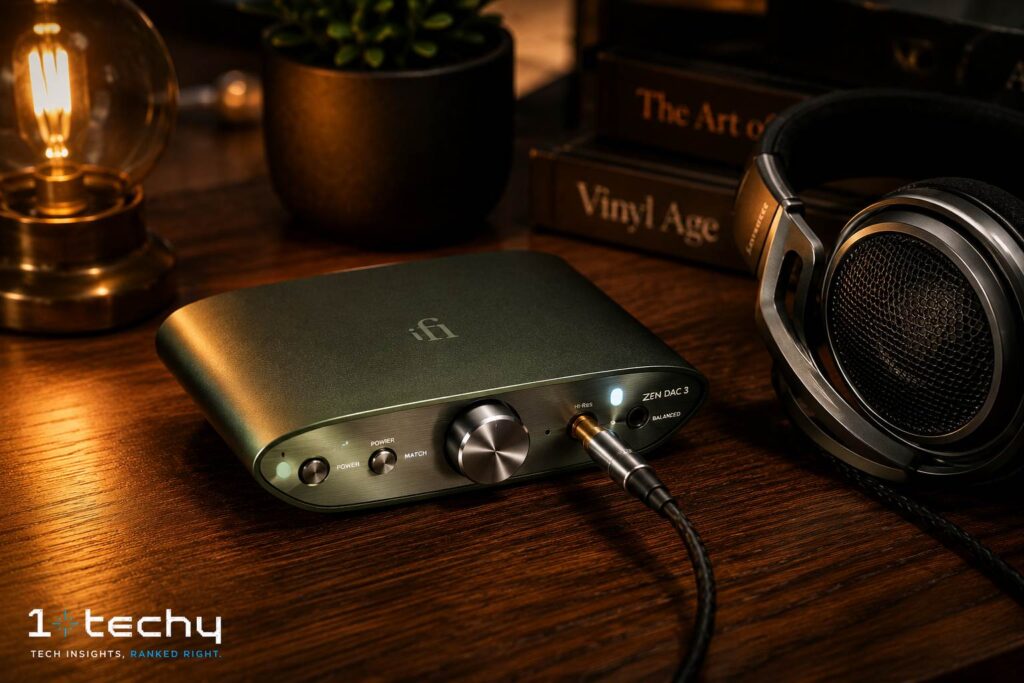
The iFi ZEN DAC 3 ($229, frequently $179 on sale) is the deliberate opposite of the Topping DX3 Pro+. Where the Topping prioritizes perfect objective measurements, the ZEN DAC 3 prioritizes how music feels.
It uses a Burr-Brown “True Native” chip, not a delta-sigma ESS or AKM chip, which means your audio files are decoded in their native format without internal conversion. The result is a characteristically warm, smooth sound that the audiophile community calls “musical.”
The hardware spec list includes genuinely rare features at this price. A fully balanced circuit topology with both a 4.4mm balanced headphone output (which the Topping lacks entirely) and a standard 6.35mm single-ended output. XBass+, iFi’s pure-analog bass boost that adds low-end weight without muddying the midrange.
PowerMatch is a switchable gain control that adapts the output to your headphones’ sensitivity. If you are pairing this with open-back dynamic headphones like the Sennheiser HD600 series or Beyerdynamic DT900 Pro X, headphones that can sound slightly lean, XBass+ transforms them.
ASR measurements are inferior to the Topping on paper. The THD+N of 0.005% balanced versus Topping’s near-perfect scores looks damning. But that number reflects intentional second-order harmonic saturation, the same mechanism that makes vintage tube amplifiers sound “warm.” It is not poor engineering. It is a design choice that subjectivist listeners actively seek out.
Here is the critical issue that you must know before buying: the ZEN DAC 3’s output power was reduced from that of the V2. It only outputs 210mW at 32 ohms single-ended, down from 280mW. At 600 ohms, it manages 18mW. That is not enough to properly drive Beyerdynamic DT880 600-ohm headphones or Sennheiser HD650s to their full potential.
Most experienced users buy the ZEN DAC 3 purely for its DAC section and XBass+ tone shaping, then route the 4.4mm balanced output into a more powerful dedicated amplifier. On its own, for efficient IEMs and sensitive headphones, it is exceptional. For power-hungry headphones, it is not the right tool.
During late-night listening at low volumes, the ZEN DAC 3 with XBass+ active and efficient headphones produces something genuinely special: a warm, full-bodied sound where bass notes have weight without being exaggerated. It is the closest thing to a tube amplifier’s character in a solid-state device at this price.
| ✅ PROS | ❌ CONS |
|---|---|
| -Burr-Brown True Native bit-perfect decoding delivers a characteristically warm, organic sound signature that ESS Sabre chips cannot replicate, ideal for bright headphones or analytical IEMs. -4.4mm balanced headphone output at this price point is rare, balanced connection provides better channel separation and a slight power improvement over single-ended. -XBass+ analog bass boost is genuinely useful: adds low-end weight without muddying the midrange, which transforms lean-sounding open-back dynamics into engaging all-day listeners. | -Critically low power output: 210mW at 32Ω and 18mW at 600Ω make it physically incapable of driving high-impedance or low-sensitivity planar magnetics. Sennheiser HD650s and Beyerdynamic DT880 (600Ω) will sound strained and hollow. -No physical power switch: the unit remains on indefinitely unless you physically unplug the USB cable. Minor but irritating for a premium-priced device. |
| BUY THIS IF | SKIP THIS IF |
| You want a warm, musical sound signature for efficient headphones or IEMs, or you need a DAC with XBass+ to inject low-end weight into lean-sounding open-back dynamics. Also excellent as a DAC-only feeding a more powerful amp. | You own high-impedance headphones (300Ω+) or power-hungry planar magnetics. The ZEN DAC 3 will leave those headphones sounding thin and underpowered. Get the Topping DX3 Pro+ instead. |
The Best Premium Portable DAC
5. Chord Mojo 2, Summit-Fi FPGA Engineering
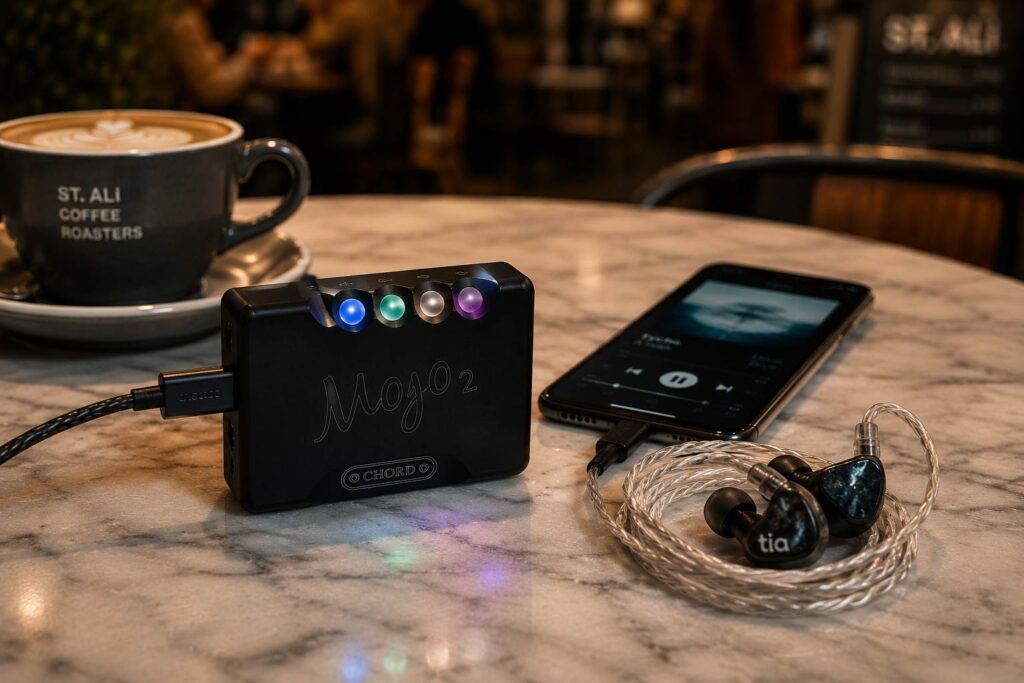
The Chord Mojo 2 ($799) occupies a category of one. It does not use ESS, AKM, or Burr-Brown chips. Chord Electronics built their own solution: a custom Field Programmable Gate Array (FPGA) running 40 DSP cores executing Rob Watts’s WTA (Watts Transient Aligned) filter.
The filter reconstructs the analog waveform with massive tap-lengths, a mathematical approach that Chord argues eliminates the noise floor modulation that all standard delta-sigma chips introduce. Whether you hear the difference depends entirely on your headphones and your source material. At the flagship IEM level, you will.
The specifications tell part of the story. A 0.06Ω output impedance, lower than almost any dedicated desktop DAC/amp at any price, ensures perfect damping control with even the most sensitive IEMs. Dynamic range of 125 dB, measured by ASR. And a 104-bit lossless UHD DSP equalizer that lets you tune frequency response without adding noise or phase shift. This is not a basic tone control. It is a studio-grade parametric EQ inside a device the size of a deck of cards.
The subjective experience is what earns its price. On female vocals through a pair of high-resolution IEMs, the Mojo 2 produces staging and micro-detail that makes a Topping DX3 Pro+ sound two-dimensional. The bass has precision and slam simultaneously, which sounds like a contradiction until you hear it.
At low volumes, 25% power, fine harmonic detail is fully audible in a way that most DACs only reveal at louder listening levels. If you have spent time with the best studio monitor speakers in a treated room, the Mojo 2’s presentation feels like bringing that spatial clarity into a portable form.
Three major dealbreakers prevent this from being a universal recommendation. First, the UI. Four unlabelled glowing spheres control volume, sample rate display, and the DSP equalizer through a memorized color-coding system.
You will consult the manual repeatedly for the first month. Second, the Micro-USB charging port in 2025 is inexcusable on a $799 device, especially when data transmission already uses USB-C. Third, some users with Apple M-series laptops and iPads report severe high-pitched white noise bursts when switching audio apps or sample rates. If you are in the Apple ecosystem, test thoroughly before committing.
| ✅ PROS | ❌ CONS |
|---|---|
| -Custom FPGA with 40 DSP cores and 0.06Ω output impedance: the lowest output impedance of any portable DAC/amp in existence, ensuring perfect IEM matching regardless of sensitivity. -Lossless 104-bit UHD DSP EQ lets you tune headphone frequency response on the fly without phase shift or noise floor degradation, not possible in any software EQ at the same quality level. -Dual 3.5mm headphone outputs: two listeners simultaneously, or connect to a desktop amp via one output while monitoring through IEMs on the other. | -Four-color “marble” UI requires memorizing a color chart to control volume and settings. Genuinely hostile interface design on a premium device, expect a learning curve of several days. -A micro-USB charging port on a $799 device in 2025 is an anachronism. The proprietary charging cable is not readily replaceable, and the port placement makes simultaneous charge-and-use awkward. |
| BUY THIS IF | SKIP THIS IF |
| You own high-resolution IEMs or flagship portable headphones and want the absolute best portable DAC/amp available, regardless of price. Also ideal for audiophiles who need lossless hardware EQ for headphone correction. | You primarily use desktop over-ear headphones and want desktop-tier power. The Mojo 2 is battery-powered and can struggle at maximum volume with insensitive flagship headphones. A desktop stack will serve those use cases better. |
Essential Comparison Matrix – Best DAC
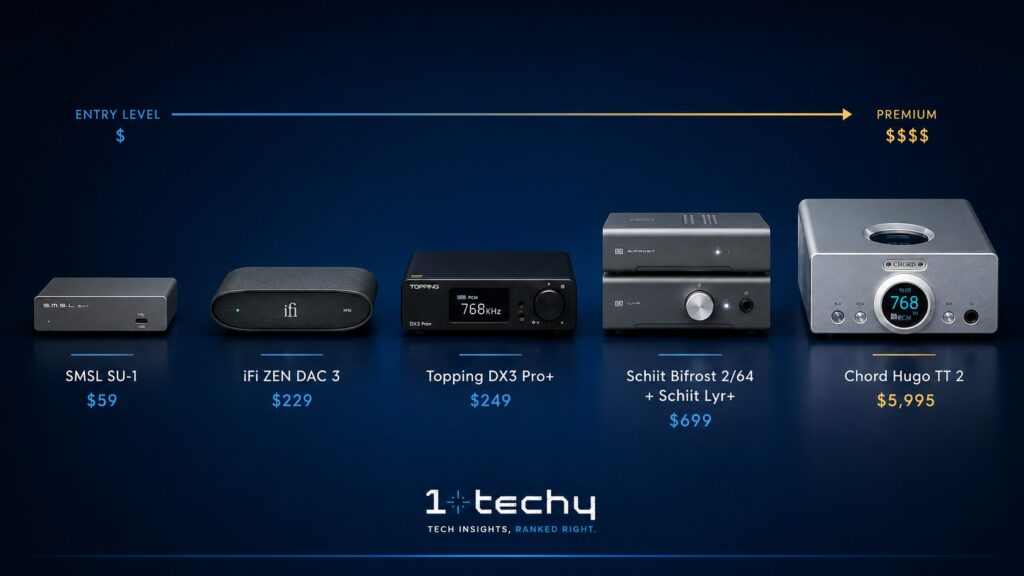
All RMS power figures are from manufacturer specifications and independently verified ASR measurements. Where RMS is unavailable, or the unit is line-out only, this is noted explicitly.
| Product | Type | Power (RMS) | Connectivity | Best For | Our Rating |
|---|---|---|---|---|---|
| SMSL SU-1 | Standalone DAC | N/A (Line-out) | USB-C, Opt, Coax | Budget / Receivers | 9.2 / 10 |
| Topping DX3 Pro+ | DAC / Amp Combo | 1800mW @ 32Ω | USB-B, BT 5.0, Opt, Coax | Power / All-in-One | 8.8 / 10 |
| iFi ZEN DAC 3 | DAC / Amp Combo | 210mW @ 32Ω | USB-C | Warmth / Musicality | 8.3 / 10 |
| Schiit Modi+ | Standalone DAC | N/A (Line-out) | USB-C, Opt, Coax | Reliability / USA-made | 9.0 / 10 |
| Chord Mojo 2 | Portable DAC / Amp | 600mW @ 30Ω | USB-C, Micro-USB, Opt | Premium Portable | 9.4 / 10 |
Buyer Regrets: 3 Mistakes to Avoid When Upgrading Your DAC
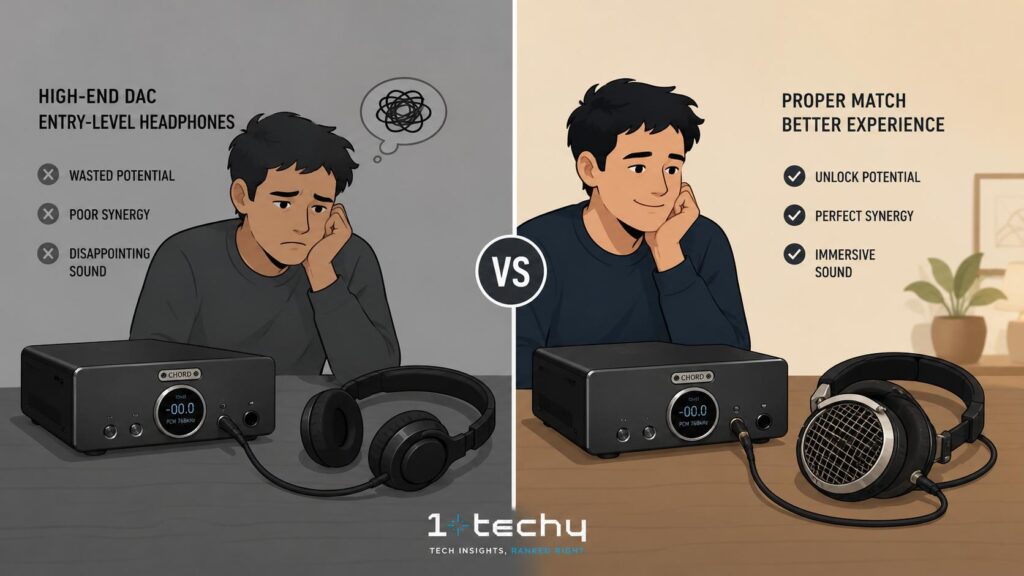
Mistake 1: Expecting a DAC to Fix Your Headphones
A DAC improves the signal delivered to your headphones or speakers. It does not change their acoustic characteristics. The audio hierarchy is roughly: transducers (headphones/speakers) account for 90% of your sound, the amplifier dictates about 9%, and the DAC provides the final 1% of refinement.
Buying an $800 Chord Mojo 2 to use with $150 headphones is a category error; the bottleneck is not the DAC. If your current headphones already sound great off your phone’s headphone jack, a DAC will lower the noise floor and clean up the imaging. It will not add bass or treble that the headphones are not producing.
Mistake 2: Buying a Bus-Powered DAC for a Desktop PC Without Checking USB Power Quality
PC motherboards, especially gaming boards with multiple GPUs, output notoriously dirty USB power contaminated with high-frequency coil whine and power supply ripple.
If you buy the SMSL SU-1 and connect it via USB to a desktop PC, you may hear a faint whine that rises and falls with GPU load. The fix is simple: use the Optical (TOSLINK) input instead of USB, which completely isolates the DAC from your PC’s electrical noise.
Alternatively, buy a self-powered DAC like the Schiit Modi+ (dual USB-C with dedicated power) or use a quality USB isolator. If you are unsure whether your setup has this problem, use a USB power meter or simply test with an Optical cable first. For more on building a great desktop audio chain, the guide to 2.1 vs 2.0 speaker systems covers what to expect at each level.
Mistake 3: Mismatching DAC/Amp Power to Headphone Impedance
This is the most expensive mistake in this list. The iFi ZEN DAC 3 is a beautifully designed device that measures well for sensitive headphones. It outputs 18mW at 600 ohms. A Beyerdynamic DT880 at 600 ohms needs at least 150mW to reach proper listening volumes with dynamic range intact.
Buyers pair these two, hear a thin, hollow, low-energy sound, and blame the DAC. The DAC is not the problem; the pairing is. Before purchasing, check your headphones’ impedance and sensitivity.
A 300-ohm headphone needs at minimum 200mW from the amplifier to perform correctly. For high-impedance headphones, look at the Topping DX3 Pro+ (1800mW) and pair it with your best bookshelf speakers under $500 setup or dedicated desktop chain.
DAC Buying Guide: The 3 Decisions That Actually Matter
Standalone DAC vs DAC/Amp Combo: Which to Buy First
This is the central decision. A standalone DAC, the SMSL SU-1 or Schiit Modi+, converts your digital signal and outputs analog to whatever amp you already own. If you have a quality integrated amplifier, AV receiver, or powered speakers, a standalone DAC is the right choice.
It does one job and does it correctly. If you are starting from scratch with only a PC and headphones, a DAC/Amp combo like the Topping DX3 Pro+ gives you everything in one unit. The trade-off is future upgradeability: with a combo unit, to upgrade the amp, you must replace the whole device.
With a stack, you replace only what needs improving. For a deeper look at how source components affect speaker performance, the studio monitors vs bookshelf speakers comparison covers how the signal chain impacts your speakers’ output directly.
RMS Power vs Peak Power: Ignore Peak, Always
Marketing materials frequently advertise peak power, the maximum instantaneous output for milliseconds before the amp clips or overheats. RMS power is what the amplifier sustains cleanly during normal operation.
The Topping DX3 Pro+ outputs 1800mW RMS at 32 ohms. Some cheaper competing units advertise “2000mW peak” at the same impedance while delivering 400mW RMS. RMS is the only number that tells you how loudly the amp can drive your headphones without distortion. All five DACs in this guide use RMS figures in their marketing, which is one reason they made this list.
USB vs Optical: When the Cable Choice Matters
For most users, USB is fine. For desktop PC users with discrete GPUs, high-end motherboards, or power supplies with coil whine, an Optical TOSLINK connection physically eliminates the problem; the glass fiber cable carries light, not electricity, so the DAC is completely isolated from your PC’s power delivery.
All standalone DACs in this guide accept Optical input. If your only source is a laptop and you are using a bus-powered DAC, the risk of USB noise is lower because laptop power delivery is typically cleaner than a desktop PSU. The bottom line: if you plug in the USB DAC and hear a hiss or whine, switch to Optical before considering a refund.
Final Recommendation: Match the DAC to Your Setup
| The Verdict by Buyer Type: Five setups. Five correct answers. None of these products are wrong; each is wrong for a different buyer. |
- If you have a stereo receiver or powered amplifier and want the cleanest sub-$100 upgrade, buy the SMSL SU-1 and connect it via Optical to avoid USB noise entirely.
- If you want long-term reliability, clean USB power handling, and a modular foundation for a Schiit Stack, buy the Schiit Modi+ and pair it with the Magni+ amplifier.
- If you want an all-in-one DAC/Amp with enough power to drive any headphone, Bluetooth LDAC for wireless, and perfect objective measurements, buy the Topping DX3 Pro+.
- If you use efficient dynamic headphones or IEMs and want music to feel warm and engaging rather than clinically accurate, buy the iFi ZEN DAC 3, then pair it with a more powerful amp if you upgrade to high-impedance headphones later.
- If you use high-end IEMs or portable flagship headphones and budget is not the primary constraint, buy the Chord Mojo 2. Nothing at any portable price point touches its output impedance, DSP quality, or overall resolution.
FAQs
Does a DAC actually make a difference?
Yes, but the size of the difference depends entirely on your current source. If you are using onboard motherboard audio with a dedicated GPU in a gaming PC, a DAC almost always produces an audible improvement: lower noise floor, eliminated hiss, better stereo imaging. If your source is already clean, a MacBook M2, for example, the improvement is more subtle. A DAC never adds something your headphones cannot produce. It removes interference from what is already there.
What do DAC chips mean? Delta-Sigma vs FPGA vs Burr-Brown?
Delta-sigma chips (ESS Sabre, AKM) use oversampling to convert digital audio. ESS chips tend toward a highly detailed, analytical presentation. AKM chips are slightly warmer under the “Velvet Sound” umbrella. Both measure excellently. Burr-Brown “True Native” chips (used by iFi) decode natively without format conversion, producing a characteristically warm, harmonic-rich sound and intentional coloration. FPGA (used by Chord) is a custom programmable chip that runs proprietary conversion algorithms, bypassing off-the-shelf silicon entirely, the most technically ambitious and most expensive approach.
Is the Topping DX3 Pro+ better than the iFi ZEN DAC 3 for hard-to-drive headphones?
For hard-to-drive headphones, anything above 150 ohms impedance, or planar magnetics like the HiFiMan Sundara, the Topping DX3 Pro+ is dramatically better. It outputs 1800mW at 32 ohms versus the ZEN DAC 3’s 210mW. The ZEN DAC 3 will technically play audio through a 300-ohm headphone, but it will sound thin, compressed, and lacking in dynamics because the amplifier section is running near its limits. If your headphones are sensitive IEMs or efficient dynamics under 100 ohms, the iFi ZEN DAC 3 competes closely and wins on tonal character.
Can I use a DAC with my existing stereo receiver?
Yes, this is one of the best use cases for a standalone DAC. Connect the DAC’s RCA output to an unused analog input (AUX, CD, or PHONO on some receivers) on your receiver. Your receiver’s amplifier section handles the power, and the DAC handles the digital-to-analog conversion cleanly. This works perfectly with the SMSL SU-1 and Schiit Modi+. For a full breakdown of how this fits into a complete system, check the guide to choosing the best stereo receivers. It covers exactly what to look for in the downstream amplification stage.
Is the Chord Mojo 2 good for gaming?
Technically, yes, it handles all audio formats and the ultra-low 0.06Ω output impedance pairs perfectly with gaming IEMs. The UHD DSP EQ can be tuned for competitive gaming to boost mid frequencies for footstep clarity. The practical problem is the UI. Volume adjustment during a game session requires remembering the color codes for each volume level. For gaming, a simpler unit like the Topping DX3 Pro+ is more practical, the front-panel knob is immediate, and 1800mW is more than enough power for any gaming headset on the market.
Affiliate disclosure: This article contains affiliate links. If you purchase through these links, 10Techy may earn a commission at no additional cost to you. Our editorial recommendations are based solely on research and testing criteria; affiliations do not influence product selection or ratings.


